PROJECT

GOOD AUNTIE

Good Auntie started with conversations, talking to Indian women about comfort and self-expression, and grew into a brand created from scratch during my time in India.

ROLES

Creative Direction

Market Research

User Interviews

Brand Strategist

Product Strategist

TOOLS

Google Excel

Google Doc

Canva

Procreate

Adobe Illustrator

Typeform

Challenge

More than 65 percent of Indian women surveyed struggled to name even one intimate-wear brand they connected with.
Most available options were either too basic or simply didn't fit well, leaving millions feeling overlooked.

Opportunity

The opportunity was to create a brand that valued comfort and self-expression, from how a bra feels when worn to the way people talk about it in everyday conversation.

Good Auntie, Who ?

Good Auntie is a design-focused intimates brand created specifically for Indian women. At its heart is the idea of choice - in size, in style, and in narrative. Each product feels personal, shaped not only by how it fits, but by how it makes you feel. It’s about more than what you wear; it’s about having the freedom to choose. I chose the name "Good Auntie" to flip a familiar Indian stereotype. In India, the word "Auntie" carries warmth, wisdom, and respect - but it also brings baggage: unsolicited advice, conservative outlooks, and a sense of being outdated. Rather than avoiding this tension, I embraced it as a creative opportunity. The goal was to transform something perceived as old-fashioned into something bold, empowering, and deeply rooted in culture.
She dares to defy what’s expected,
She owns her curves, her choices, her voice,
She dreams big, without limits or fear,
She doesn’t wait for permission, she builds what’s missing,
She’s cheeky, she’s good, and she’s your reminder to do the same.

She dares to defy what’s expected,
She owns her curves, her choices, her voice,
She dreams big, without limits or fear,
She doesn’t wait for permission, she builds what’s missing,
She’s cheeky, she’s good, and she’s your reminder to do the same.

She dares to defy what’s expected,
She owns her curves, her choices, her voice,
She dreams big, without limits or fear,
She doesn’t wait for permission, she builds what’s missing,
She’s cheeky, she’s good, and she’s your reminder to do the same.

Screenshot of the Good Auntie pitch deck title slide with the text “GOOD AUNTIE – For the ones creating their own future."

Primary Market Research.

I started with primary research, designing two surveys to understand how Indian women experience comfort, fit, and confidence in intimatewear. To reach women in Tier 1 cities like Bangalore and from diverse backgrounds, I created a series of posters and stickers placed in everyday spaces - cafés, gyms, nail salons, even inside clothing pockets at Zara boutiques - anywhere our target audience spent time. I also circulated the survey across WhatsApp groups to reach beyond Bangalore. The goal was to spark curiosity and invite honest, unfiltered responses.
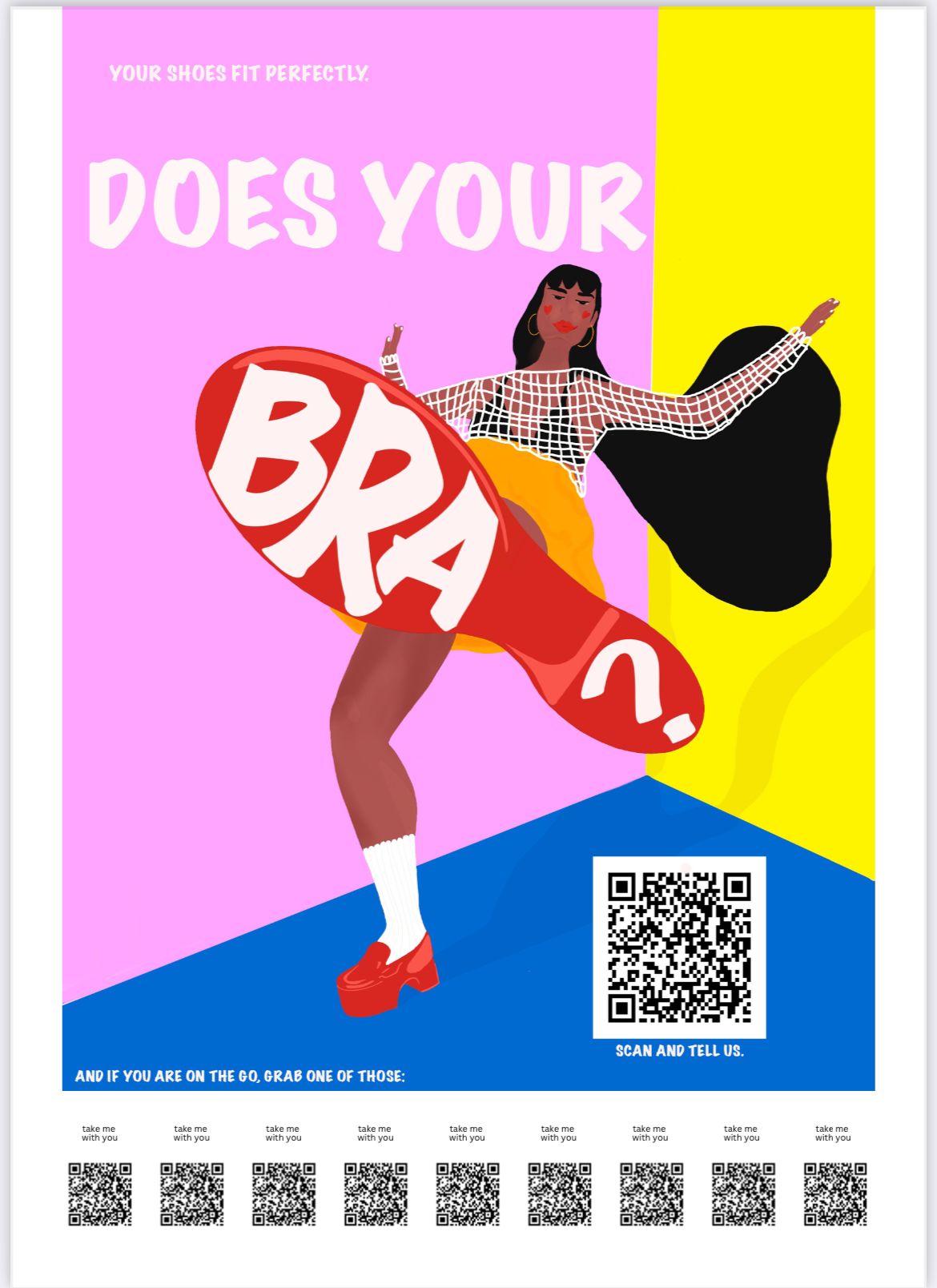
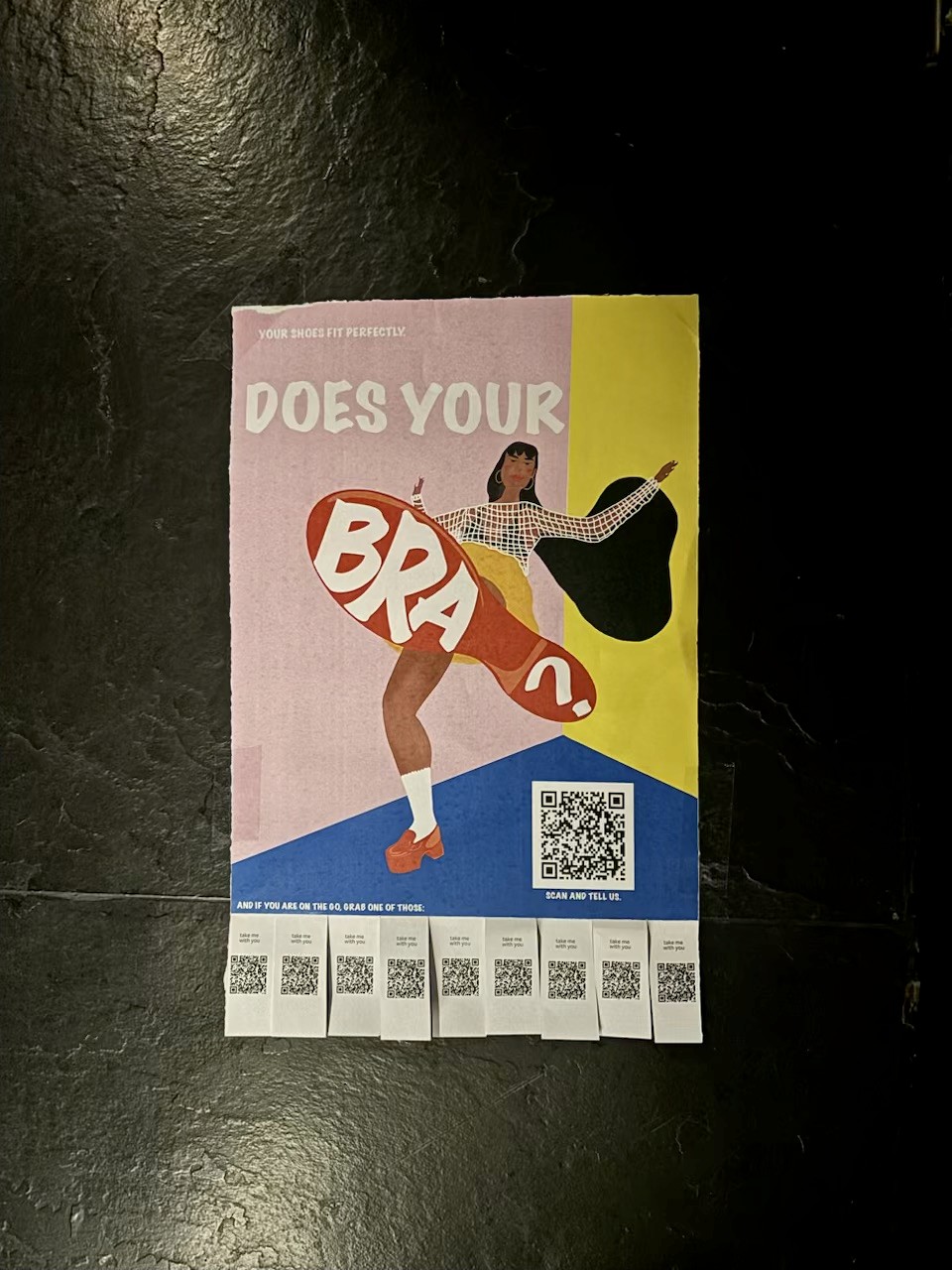
Illustrated poster reading “Your shoes fit perfectly. Does your bra fit?” with a woman kicking toward the viewer and a QR code.
Poster: “Your shoes fit perfectly. Does your bra?” with kicking woman, survey QR code, on a wall of a club in Bangalore.

What I learned

After surveying 166 women across Tier 1 cities within the country using two targeted surveys, I focused on understanding their habits, frustrations, and preferences around intimatewear, and the results were clear.

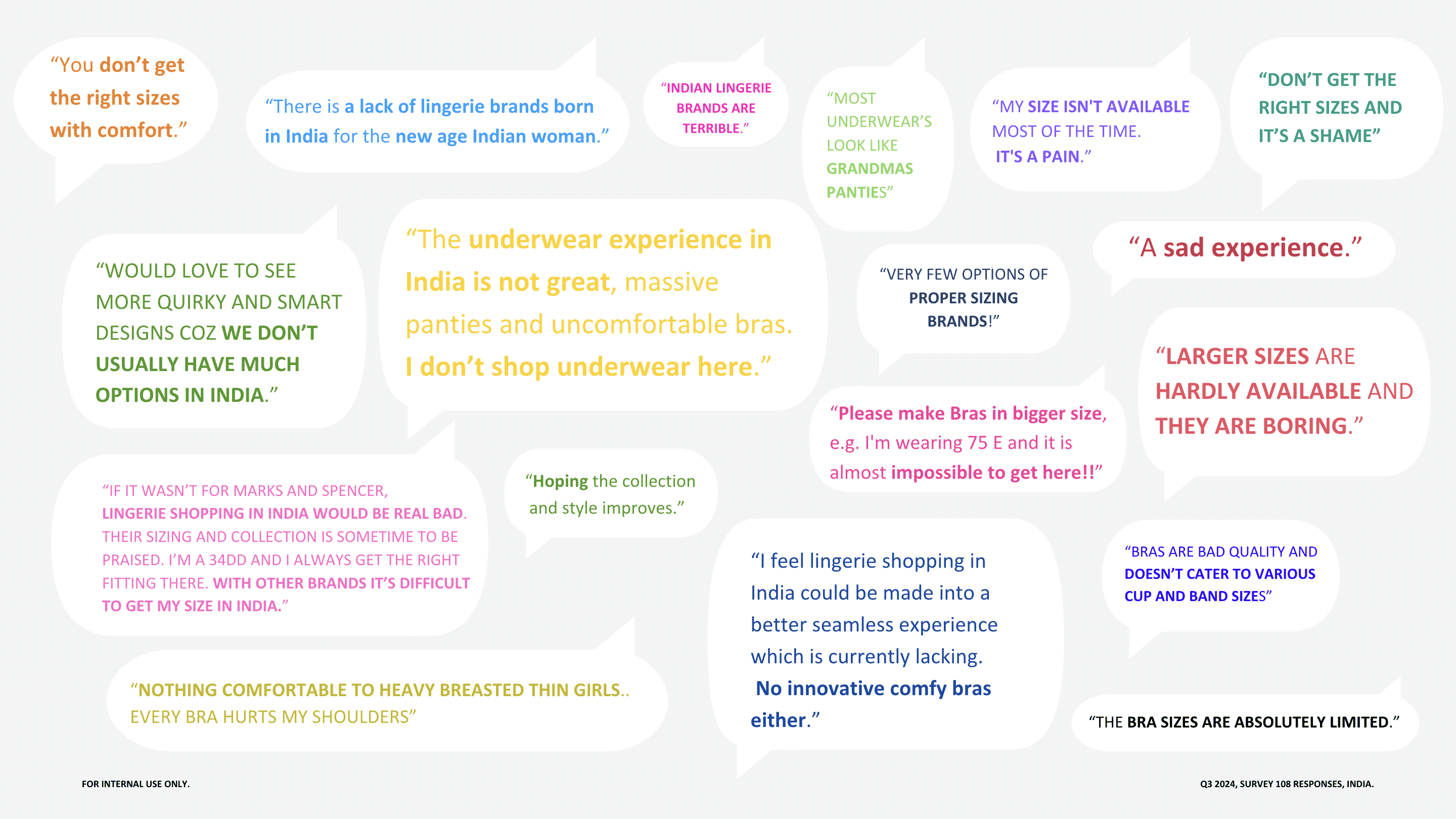
In the first survey, when asked to name an Indian intimates brand they trusted, 73 out of 108 women said “None.” That alone pointed to a significant gap in trust and brand connection. Across responses, consistent patterns emerged: poor fit, limited variety, and a lack of cultural connection to the product. Underrepresented body types were especially underserved. Words like “boring,” “sad,” and “shameful” appeared repeatedly, not just in reference to the bras themselves, but also to the shopping experience.
And finally, most women felt they were settling, not choosing. That insight became the foundation for Good Auntie.

The unmet needs were clear:

  • Bras that actually fit Indian bodies

  • Designs that reflect personality and self-expression

  • Innovative options beyond the conventional

After surveying 166 women across Tier 1 cities within the country using two targeted surveys, I could focus on understanding their habits, frustrations, and preferences around intimatewear, and the results were clear.

In the first survey, when asked to name an Indian intimates brand they trusted, 73 out of 108 women said “None.” That alone pointed to a significant gap in trust and brand connection. Across responses, consistent patterns emerged: poor fit, limited variety, and a lack of cultural connection to the product. Underrepresented body types were especially underserved. Words like “boring,” “sad,” and “shameful” appeared repeatedly, not just in reference to the bras themselves, but also to the shopping experience.
And finally, most women felt they were settling, not choosing. That insight became the foundation for Good Auntie.

The unmet needs were clear:

  • Bras that actually fit Indian bodies

  • Designs that reflect personality and self-expression

  • Innovative options beyond the conventional

After surveying 166 women across Tier 1 cities within the country using two targeted surveys, I could focus on understanding their habits, frustrations, and preferences around intimatewear, and the results were clear.

In the first survey, when asked to name an Indian intimates brand they trusted, 73 out of 108 women said “None.” That alone pointed to a significant gap in trust and brand connection. Across responses, consistent patterns emerged: poor fit, limited variety, and a lack of cultural connection to the product. Underrepresented body types were especially underserved. Words like “boring,” “sad,” and “shameful” appeared repeatedly, not just in reference to the bras themselves, but also to the shopping experience.
And finally, most women felt they were settling, not choosing. That insight became the foundation for Good Auntie.

The unmet needs were clear:

  • Bras that actually fit Indian bodies

  • Designs that reflect personality and self-expression

  • Innovative options beyond the conventional

Screenshot of answers from the sruvey figuring as speech bubbles showing frustrations with lingerie size and experience.

Second market research

Industry data and cultural trends confirm the gap: India’s $6.5 billion intimates market remains dominated by plain, one-style-fits-all products. At the same time, Gen Z and millennial women are increasingly buying better-designed underwear abroad, pieces that reflect identity, and personality. When they return home, the local market fails to meet them there.
That’s where Good Auntie comes in.

Primary Persona: Drishti

Drishti represents a rising class of Indian women - globally fluent, culturally rooted, and system-aware. She’s underserved because the intimatewear market still treats Western silhouettes as the global default. She lives in a world of 5-minute Blinkit deliveries, instant UPI payments, and algorithm-fed global fashion at her fingertips, yet she still can’t find a bra that fits her body or her personality. She’s not just looking for fit. She wants to know that an India-born brand built for today sees her, understands her, and was built with her in mind.
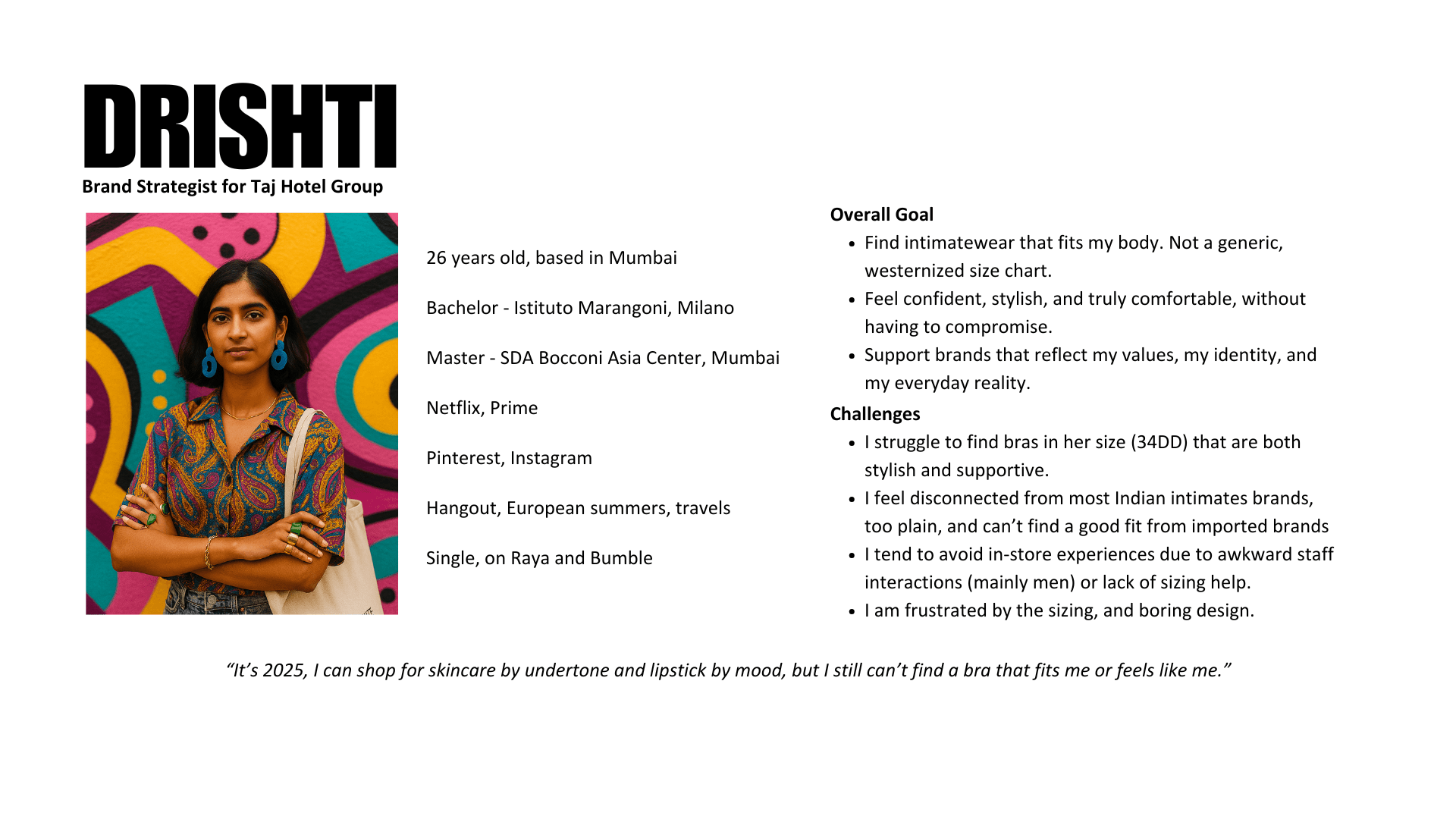
Persona profile slide for a brand strategist, showing a portrait photo and a list of goals and challenges related to finding well-fitting bras.

Second Persona: Aastha

Aastha, 21, lives in Kolkata and embodies a Gen Z mindset: globally aware, and digitally fluent. She scrolls Instagram for outfit inspiration and shops effortlessly on Myntra, expecting global-standard UX by default. She’s currently interning as a receptionist in a tourism-facing business, regularly interacting with international guests, though she hasn’t traveled outside India herself yet.

Aastha isn’t seeking luxury; she’s just done settling for affordable intimatewear that feels outdated. Foreign brands are aspirational, but out of reach. What she’s looking for is comfort with intention, design that reflects her mood and vibes, and a brand that sees her - not one that talks down to her.

India-Born & Design-Led

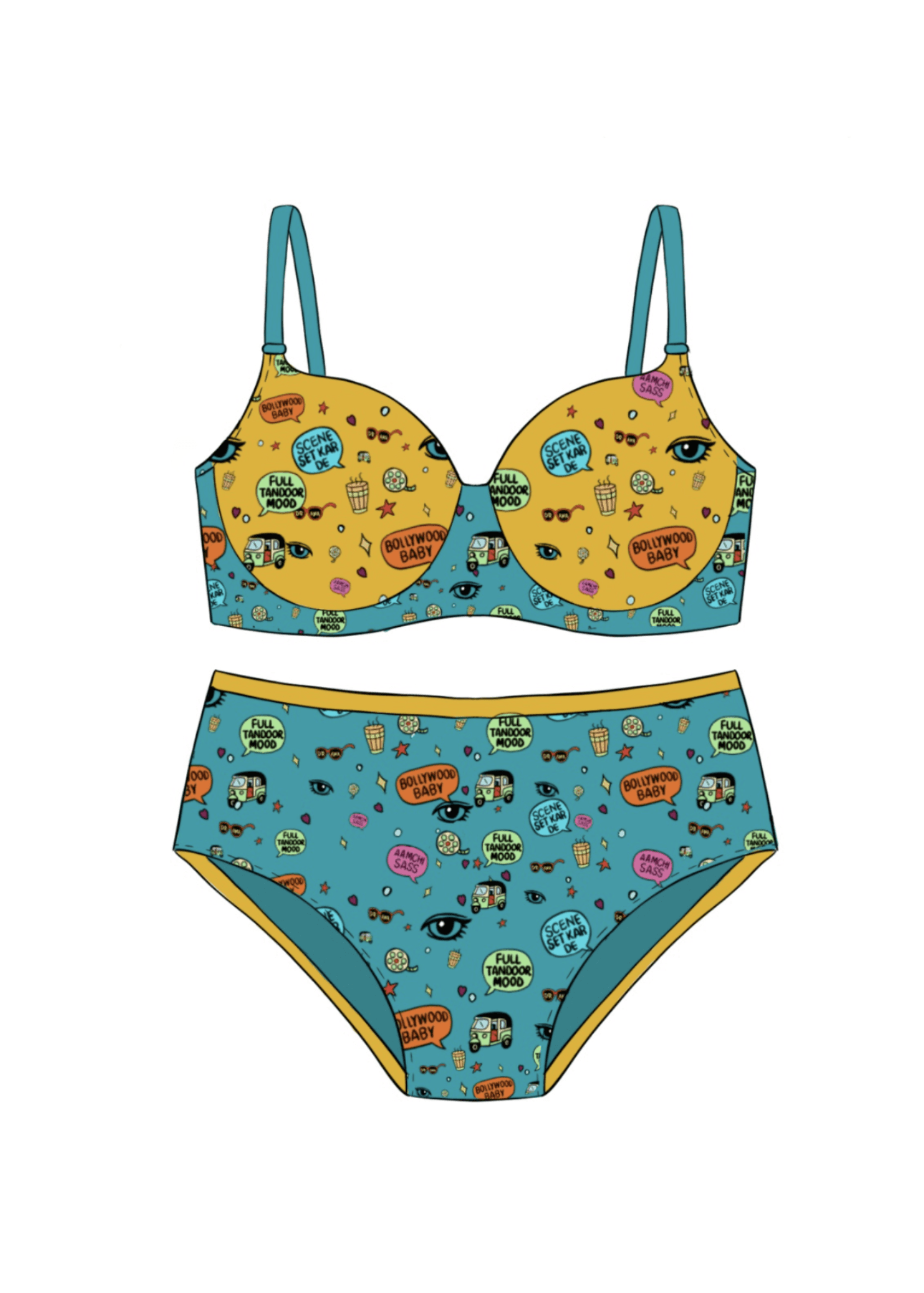
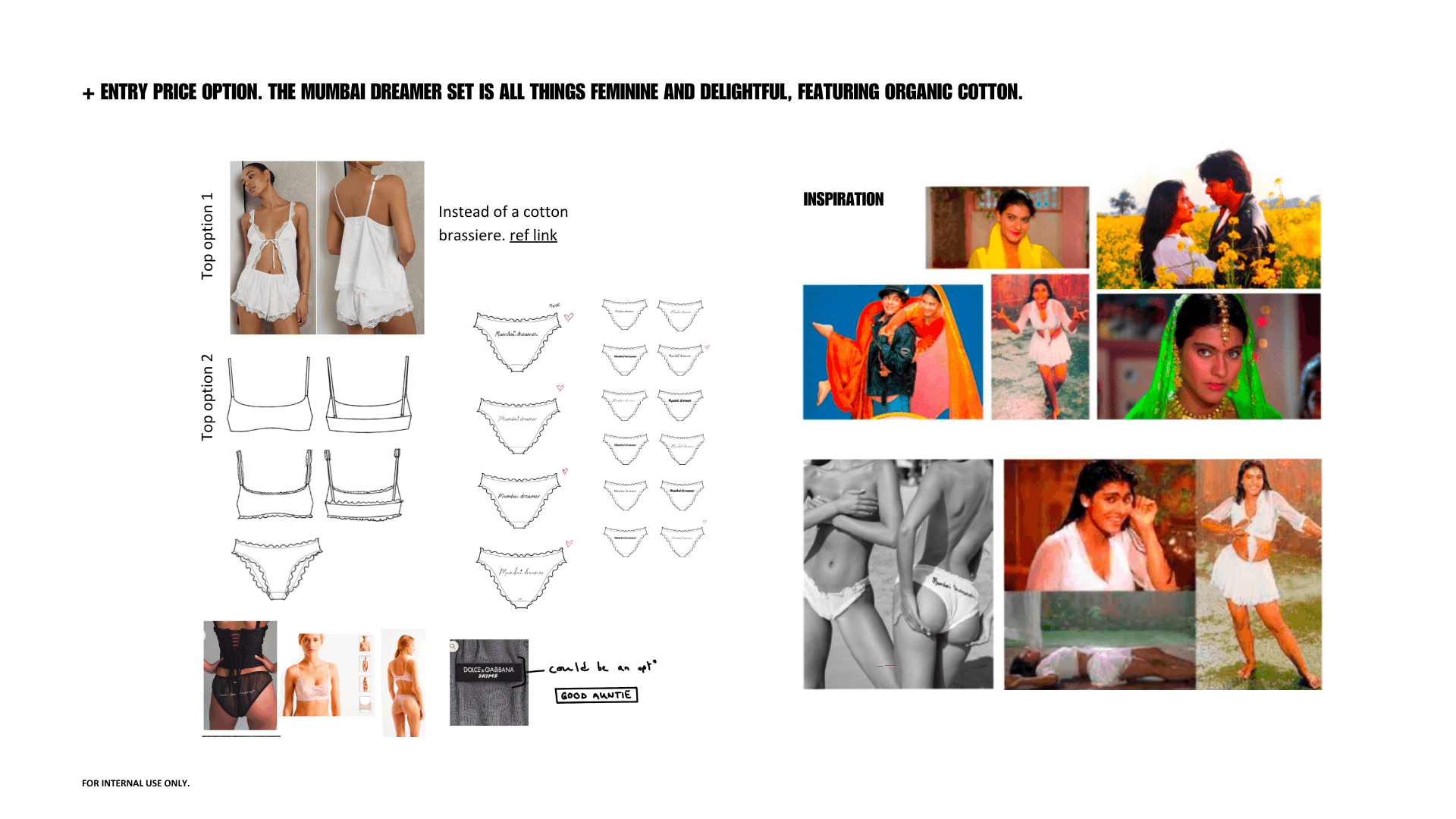
Every Good Auntie collection is named after a city of India, not just as a theme, but as a system of inspiration that builds cultural relevance and emotional belonging. The Mumbai collection, “Good Auntie Goes to Mumbai,” gets is inspiration for the designs from the city’s restless energy: Bollywood, sea-washed colors, tropical motifs, the quick-fire rhythm of street food culture, etc.
Next up: “Good Auntie Goes to Delhi,” where the references shift to Mughal architecture, regional crafts, historic textiles, and the quiet power of centuries-old design traditions. And we’re just getting started. From Goa to Pondicherry and beyond, each drop explores a new rhythm of Indian identity, urban, and alive. And most importantly, it offers a narrative throughline within India’s infinite creative landscape - a living system where each region holds its own code, visual, cultural, emotional, historical, and every collection is a deliberate act of decoding.

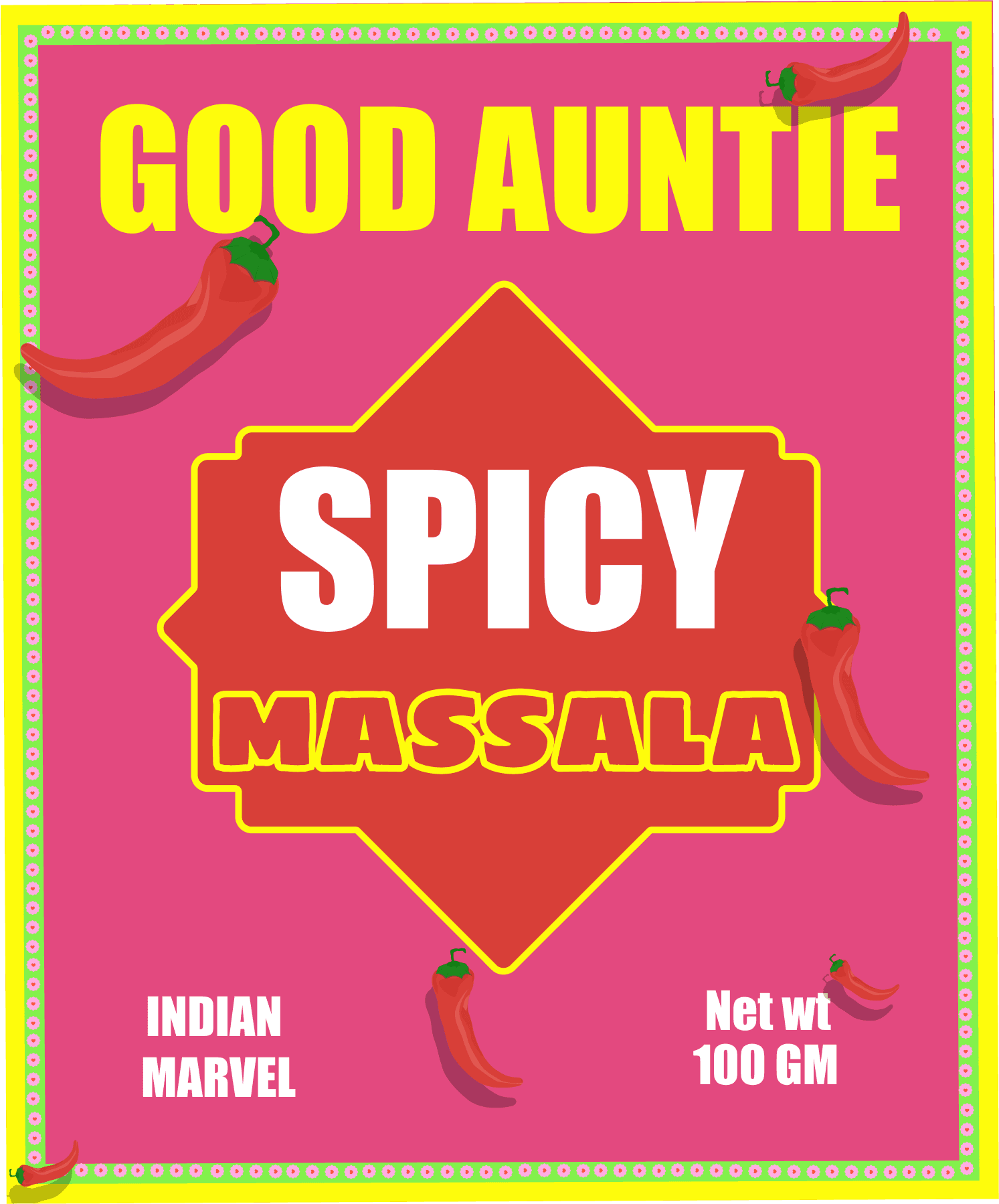
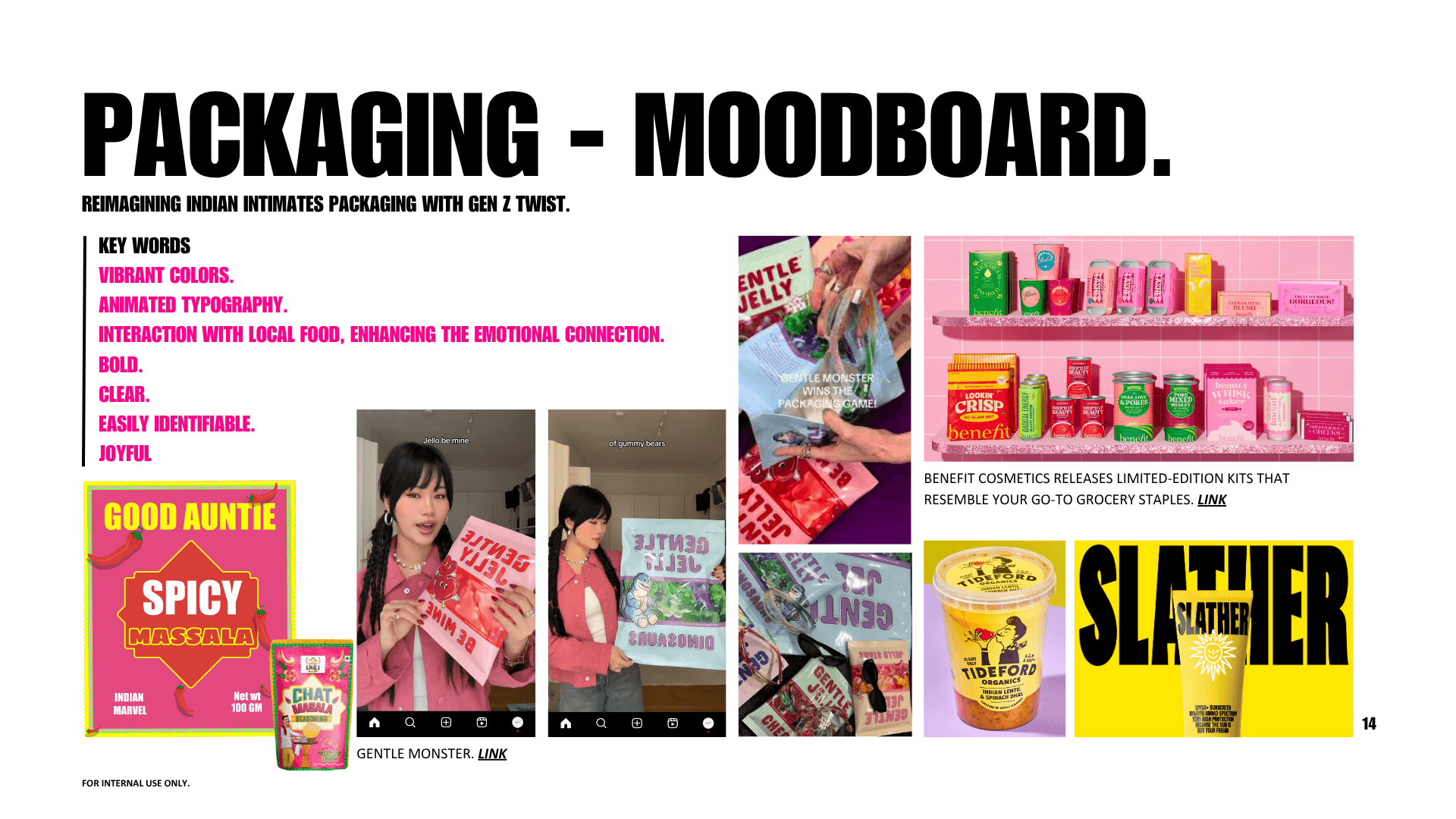
Even our merch becomes part of the conversation: caps and tees stamped with phrases like “Eat Indian, Kiss French” or “Chalo, Let’s Be Nice” - where “Chalo” means “let’s go” in Hindi. Drop-specific pieces like the “Mumbai Lover” cap blur the line between streetwear and storytelling. The packaging borrows from the visual language of Indian food wrappers making it vibrant, layered, instantly familiar, and hard to forget.

From product to packaging to language, everything is designed to feel Indian - not nostalgic - but current, sharp, and intentional.
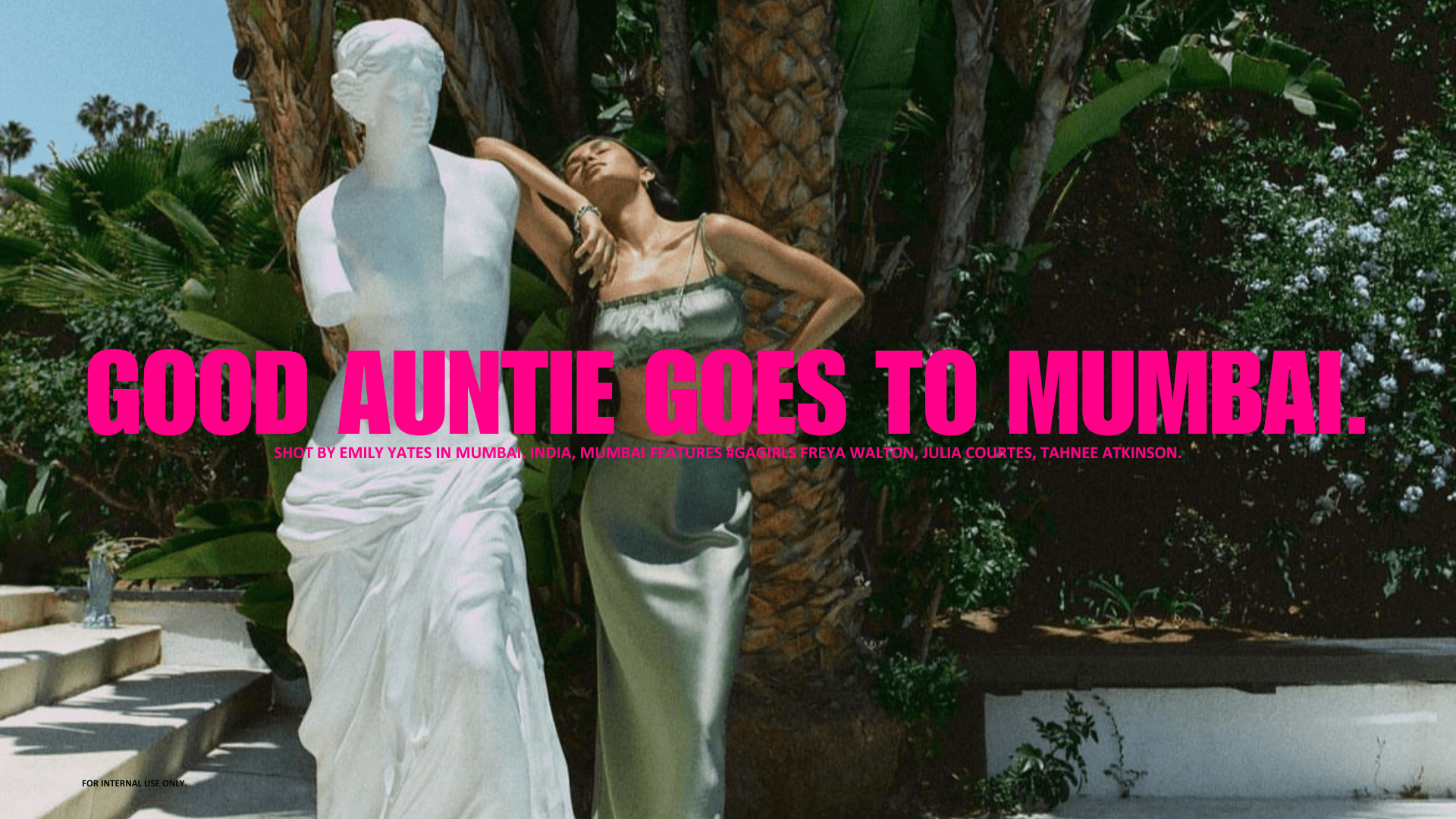
Promotional image with the headline “Good Auntie Goes to Mumbai,” showing a woman posing beside a classical statue in a lush outdoor setting.
Design exploration board for the Mumbai Dreamer set, with garment sketches, reference images, and visual inspiration influenced by classic Indian cinema.
Packaging mood board with bold typography, vibrant color palettes, and visual references inspired by grocery and beauty packaging for Good Auntie.

Make It Yours: A modular, wearable language of identity designed for the self

From nose pins to anklets, jewellry in India self-expression is layered, visible, and personal. So we brought that same logic to intimates. Good Auntie's IP protected - pending charm system lets women customise their bra based on mood, meaning, or moment, from chakra-aligned stones to initials to playful charms. Each charm turns the garment into something lived-in, claimed.
In a category that often flattens individuality, we’re designing a system that restores it.
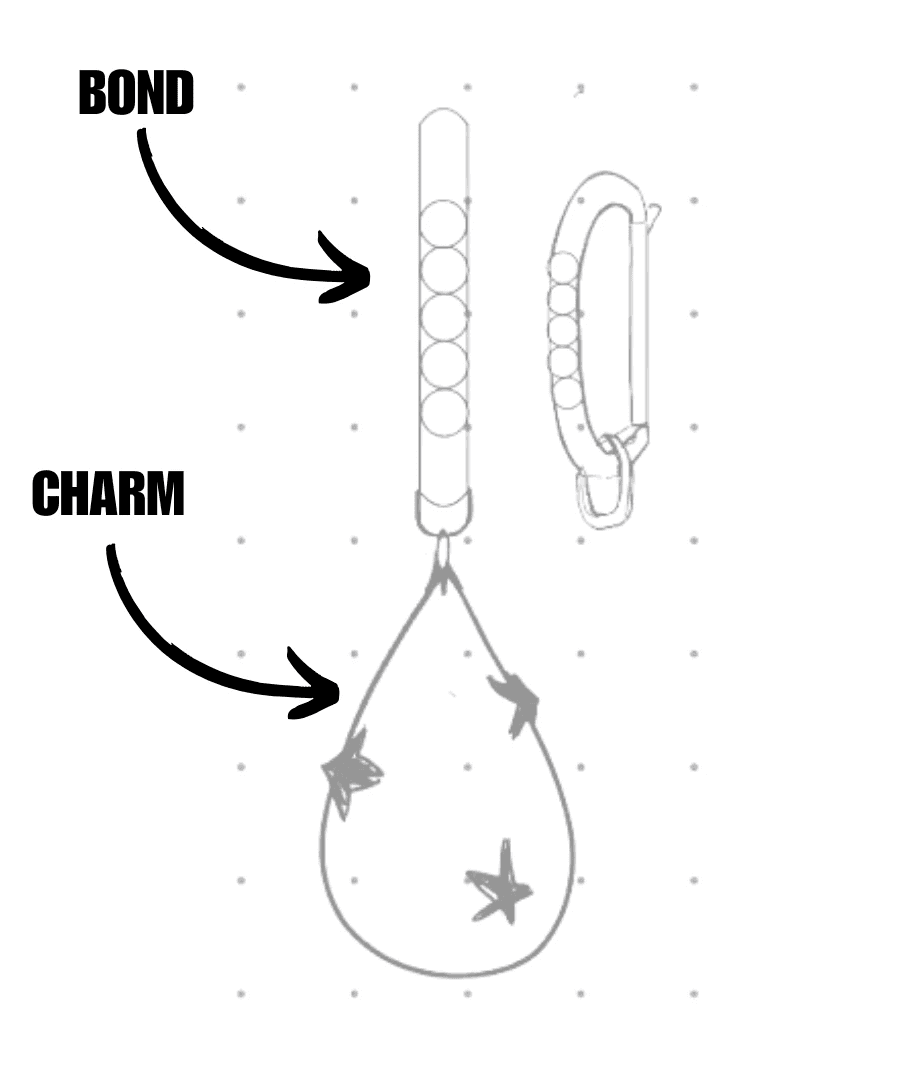
Hand-drawn concept sketch of an accessory system, featuring a long beaded bond element and a teardrop-shaped charm decorated with small stars.

Bonds open and click directly onto the bra as the foundation of the look.

  • Each bond has a hoop to securely connect up to 3 charms at a time, depending of the charm picked.

  • Listen for the click to know it closed securely.

  • Now one can mix and match any combination of charms with any bonds.

  • All are : Waterproof, Tarnish-Resistant, Hypo-Allergenic. 18K Yellow Gold ion-plated on Stainless Steel. Non-toxic, lead-free enamel.

Designing for Team Up

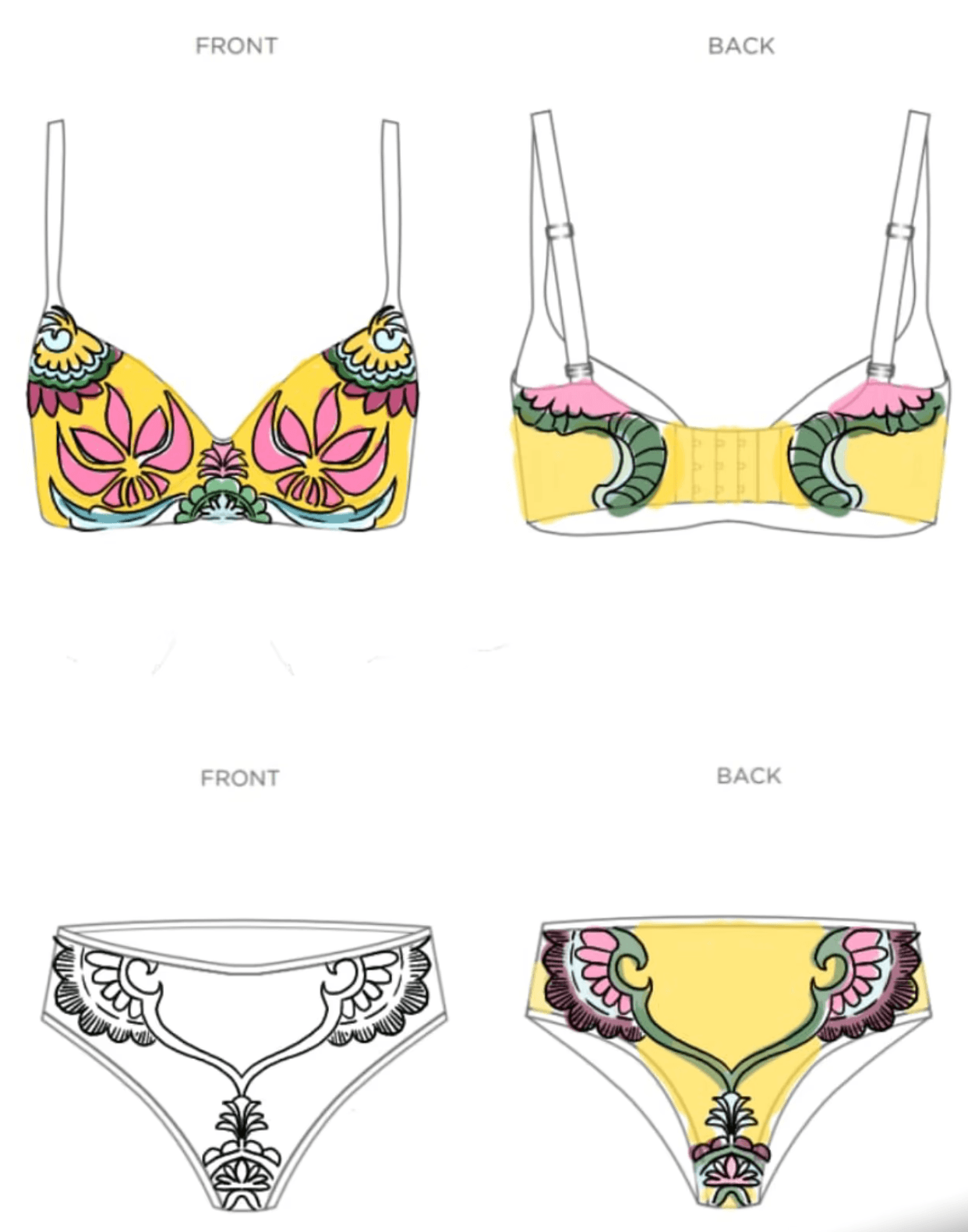
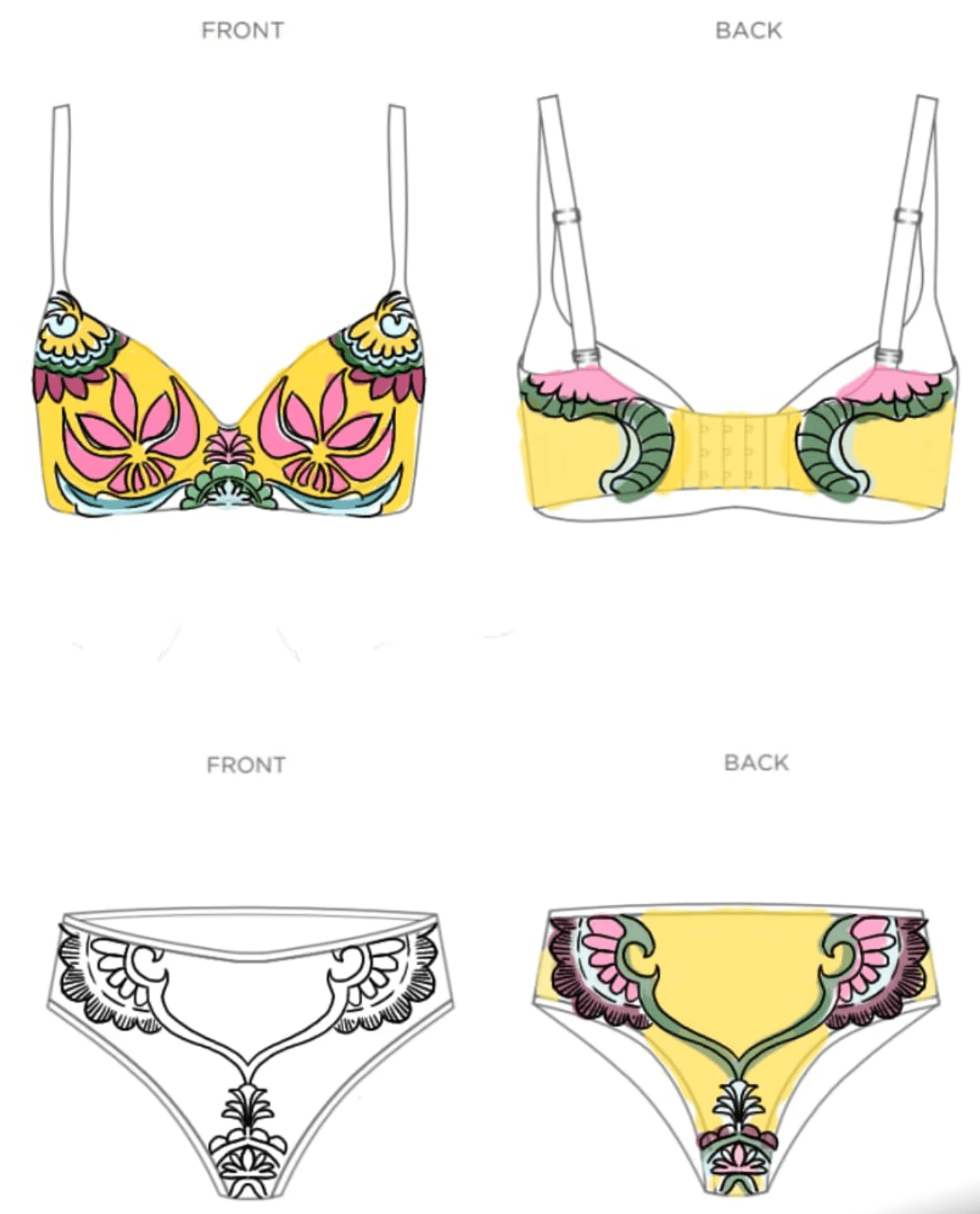
Recognising when you're not the expert, and building the system to find who is, was not a simple task. I knew the creative direction for Good Auntie, but not how to design underwear. So I scanned LinkedIn for Indian-origin intimates designers, shortlisted those aligned with the brand's mindset, and reached out with a brief introduction. I invited for a call the ones who responded positively, walked them through the brand, explained it was unpaid, and outlined a selection process. Those still interested were asked to submit a design set based on the deck. That’s how I brought on the first designer: aligned, skilled, and willing to build from day one.

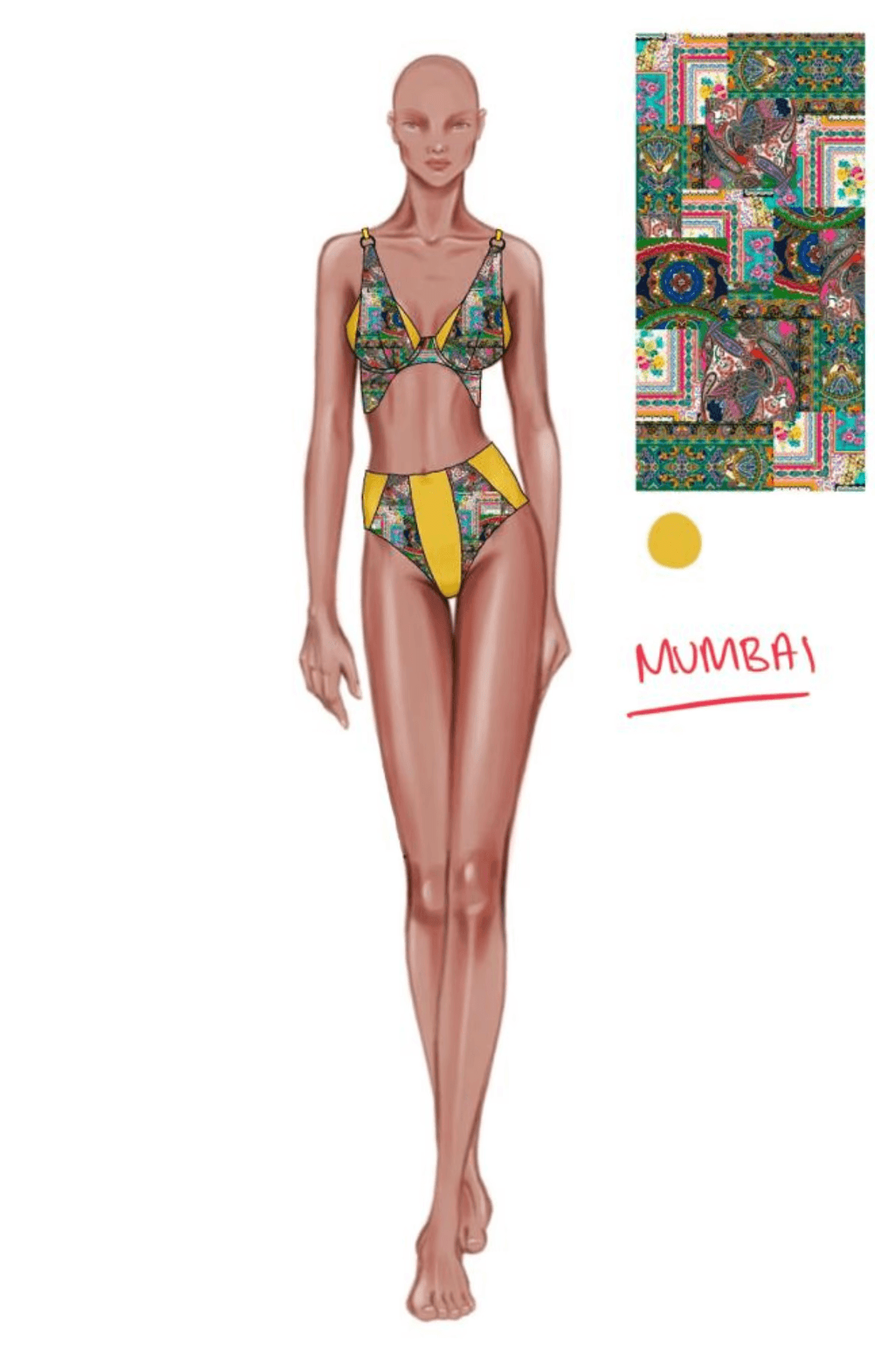
Below: examples of a few of the design sketches submitted as part of the selection process.
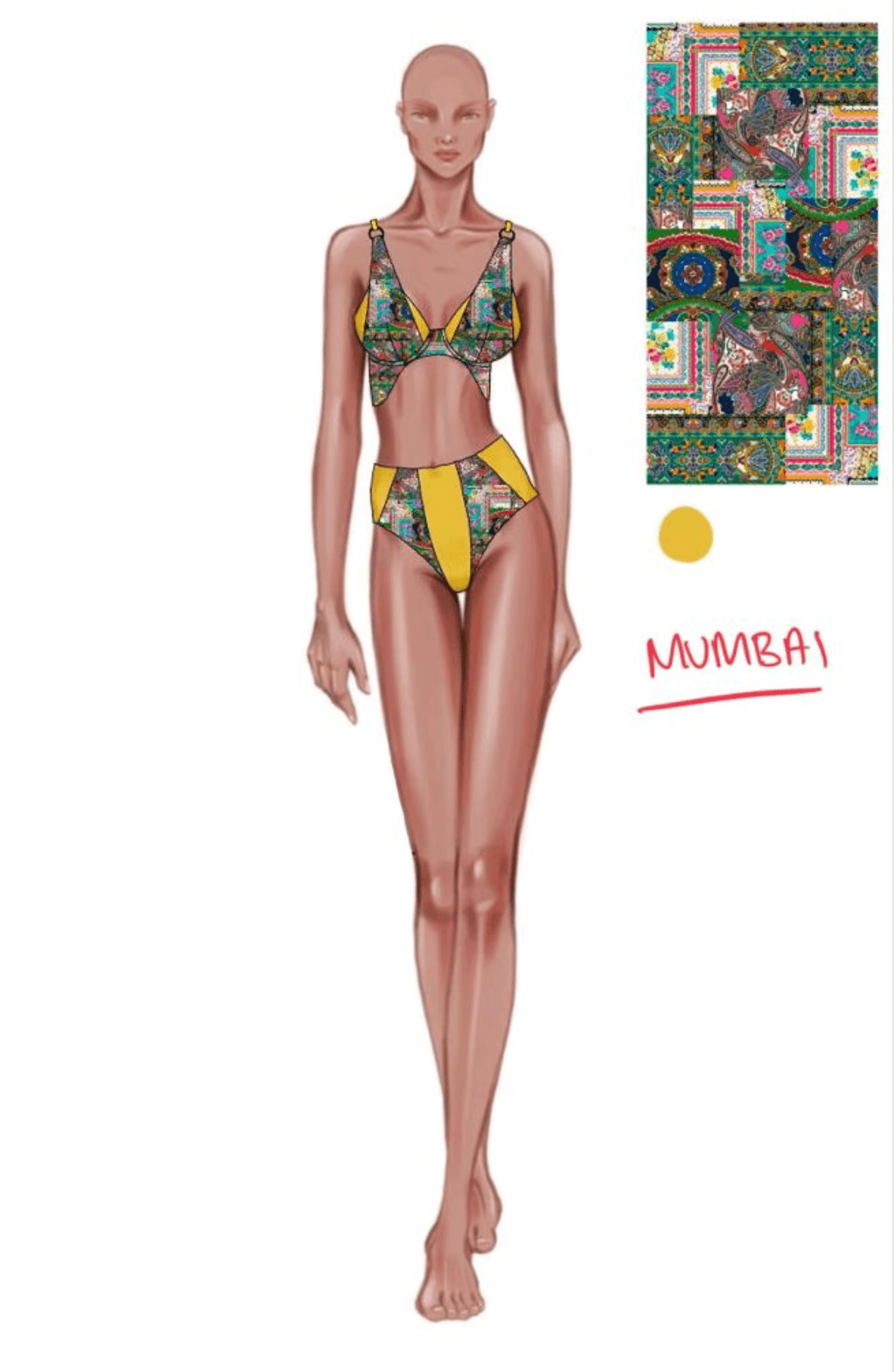
Illustration of a two-piece design with a colorful Mumbai-inspired print and yellow accents.
Two-piece lingerie illustration with graphic pattern.

Designing for Production

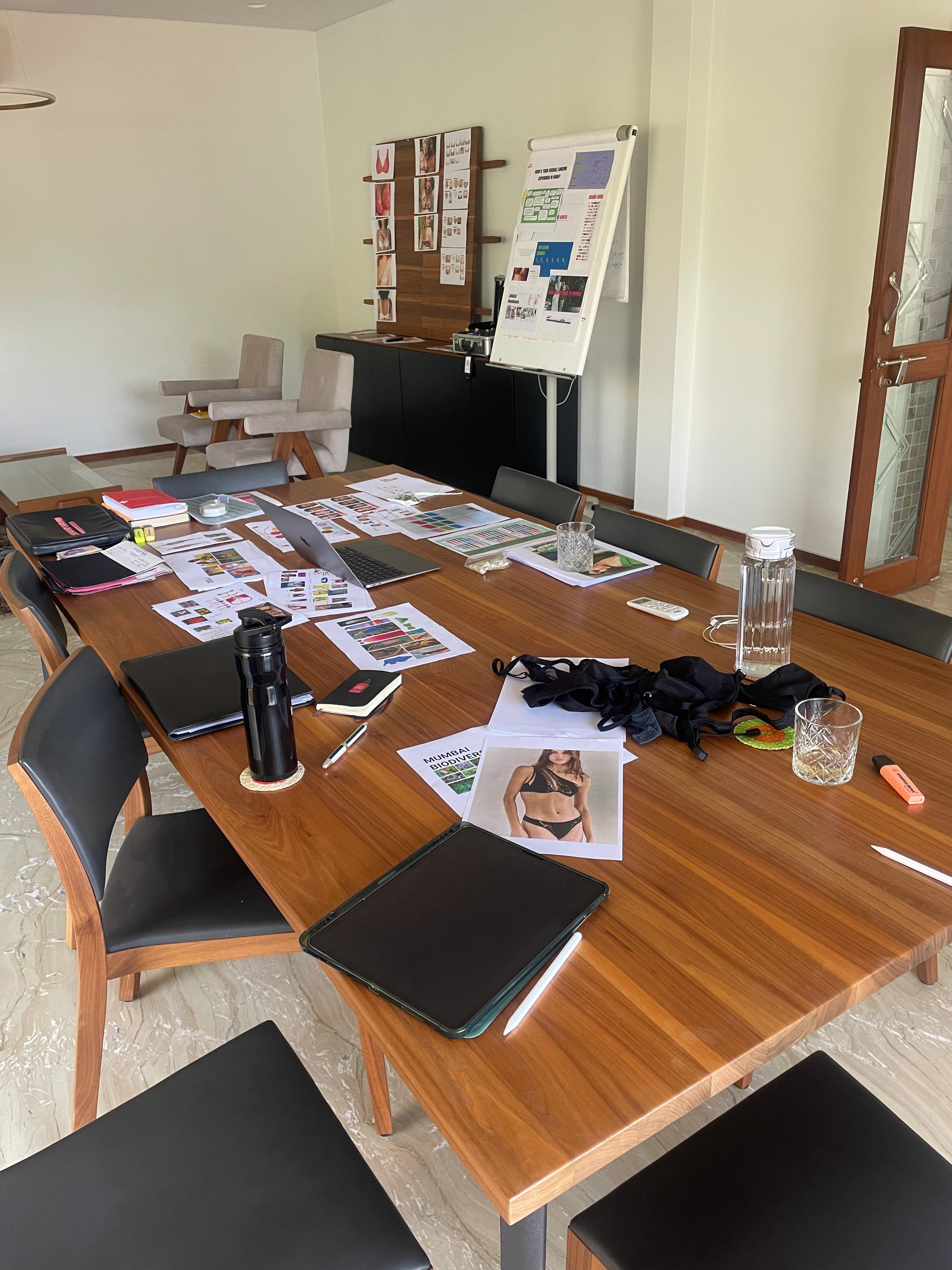
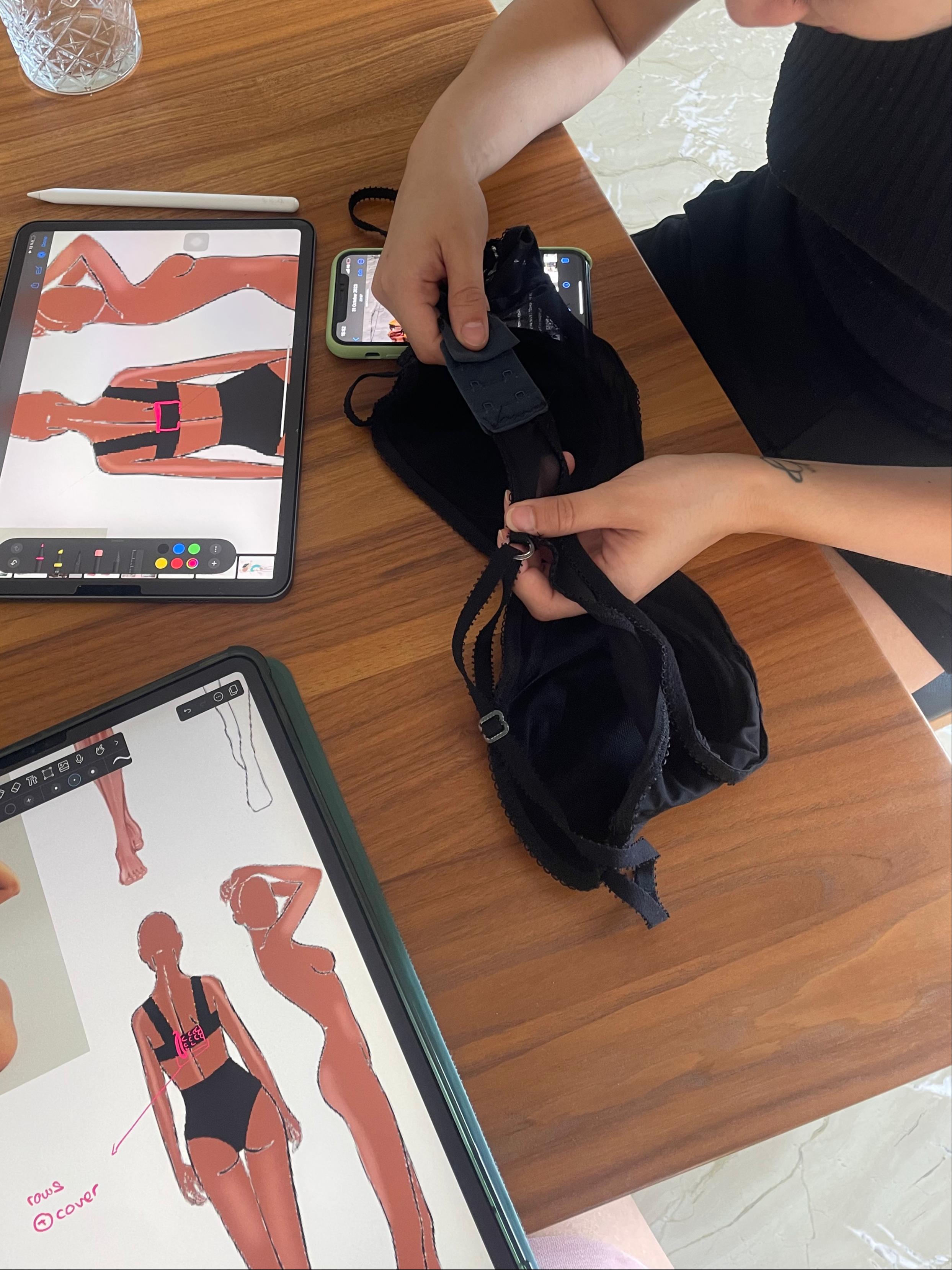
Designing intimates means designing with millimeter-level precision, because comfort isn’t visual, it’s structural. We built a cross-functional team early: product, textile, and brand. I led the technical design sprint, working closely with partners to test trims, straps, and bonding methods. We visited fairs, have been rejected by (many) suppliers, and learned to prototype with manufacturer constraints in mind. Nothing can be outsourced blindly, every step has to pass through real-customer use, and cost logic.

Below: early fit explorations, component tests, and textile sourcing during India ITME and BharatTex.
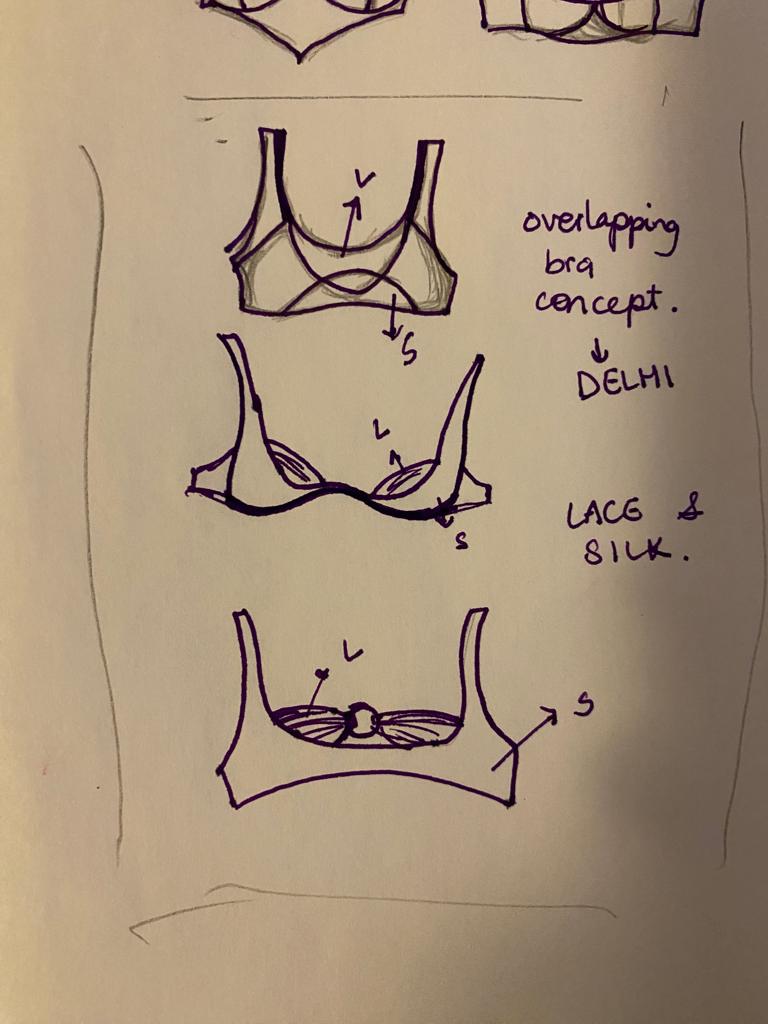
Three Delhi Collection bra sketches with Lace and Silk support zones.
Person at table reviewing a black bra prototype with sketches and a tablet nearby.
Wooden table with lingerie samples, moodboards, and drinks set up for a creative work session.
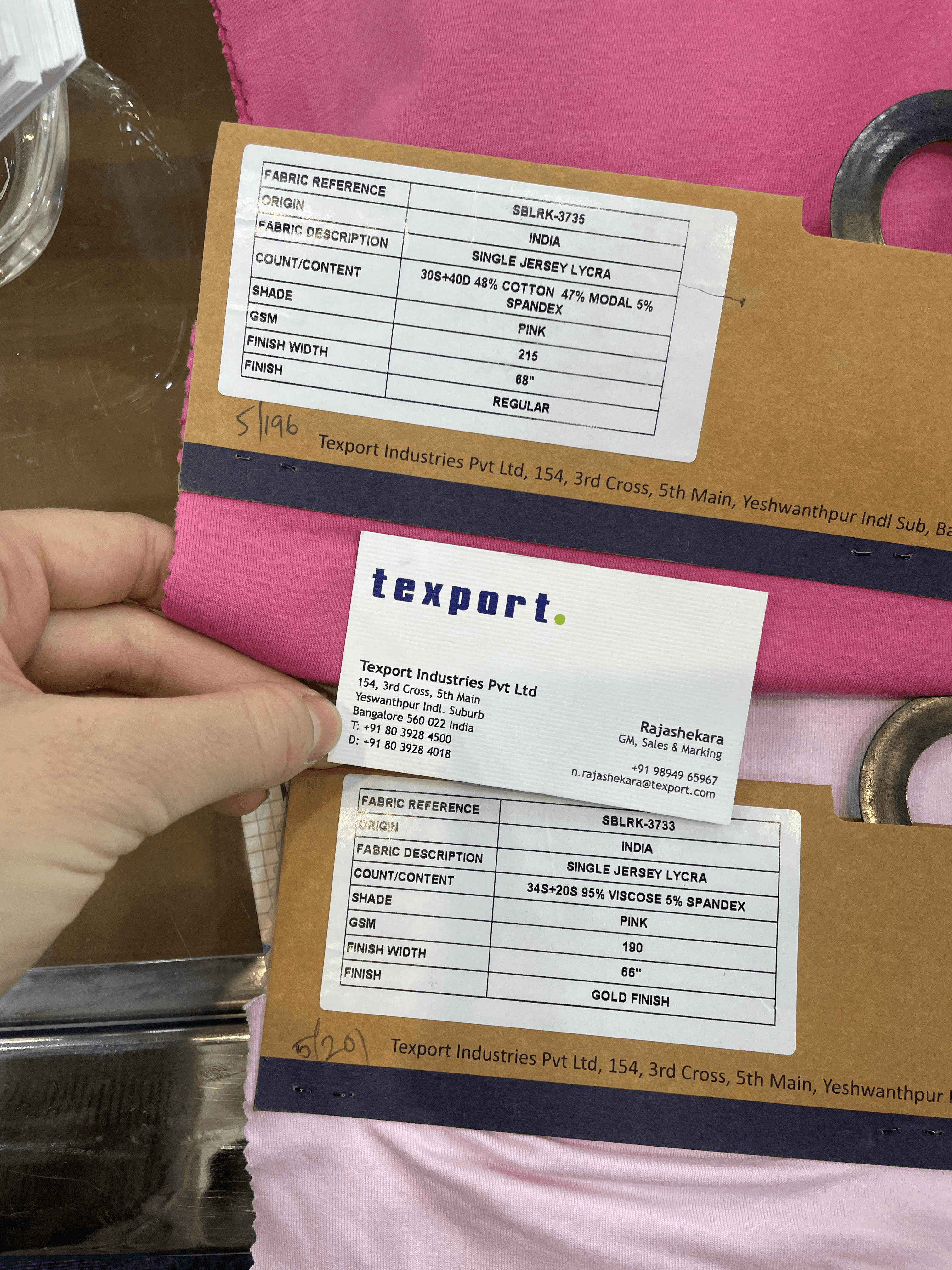
Close-up of two pink textile samples with manufacturer labels detailing fabric content, weight, and finish.
Me smiling at night by lit-up Bharat Tex Summit with blue lights.

Where's Good Auntie now?

Good Auntie is now in transition: from validated insight to scalable product. We're refining fit prototypes, preparing for pilot production, and translating emotional resonance into material form. Our charm system, now in the patent filing process, is evolving into a modular personalisation platform. We're testing how identity can become wearable in a new way. Meanwhile, we're building our manufacturing backbone across India and Southeast Asia to ensure ethical production at scale. The goal isn’t to launch fast, it’s to launch right. Indian women deserve design that fits both their bodies and their stories.

Lessons I have learned so Far

Building Good Auntie taught me that design isn’t just about products, it’s about systems, decisions, and the people behind them.

With Good Auntie, I learned that behind this whole project, I want to build a brand, a platform, that says women’s desires, curiosity, pleasure, and voices are not niche. They are not a side category; they are the culture. With this brand, I want to name a need that already exists in the culture, one people are already feeling - and give it shape, language, and scale. Female desire is not dangerous, it is generative. It literally builds worlds. I want Good Auntie to be a shameless, rule-breaking, bold, unpredictable, undefinable, punk-rock business-tycoon-baddie, proving that aunties can be good, but also unlocking women in India and beyond from the shackles of patriarchal categorisation.

I also learned that I love thinking through manufacturing constraints and spending time in factories. In ambiguity, clarity becomes leadership, and constraints become fuel for creativity. Then that culture isn’t just context, it’s material. Designing in India meant rethinking assumptions, from fit to business model. I also learned that marketing isn’t separate from design, it’s how the product speaks, and it demands the same precision as fit or form.

Finally, I learned that what truly scales isn’t the product itself, but the thinking behind it and that great design holds complexity without losing sight of the human it serves. Waw. That's a lotta learning - any only the beginning.


Building Good Auntie taught me that design isn’t just about products, it’s about systems, decisions, and the people behind them.

With Good Auntie, I learned that behind this whole project, I want to build a brand, a platform, that says women’s desires, curiosity, pleasure, and voices are not niche. They are not a side category; they are the culture. With this brand, I want to name a need that already exists in the culture, one people are already feeling - and give it shape, language, and scale. Female desire is not dangerous, it is generative. It literally builds worlds. I want Good Auntie to be a shameless, rule-breaking, bold, unpredictable, undefinable, punk-rock business-tycoon-baddie, proving that aunties can be good, but also unlocking women in India and beyond from the shackles of patriarchal categorisation.

I also learned that I love thinking through manufacturing constraints and spending time in factories. In ambiguity, clarity becomes leadership, and constraints become fuel for creativity. Then that culture isn’t just context, it’s material. Designing in India meant rethinking assumptions, from fit to business model. I also learned that marketing isn’t separate from design, it’s how the product speaks, and it demands the same precision as fit or form.

Finally, I learned that what truly scales isn’t the product itself, but the thinking behind it and that great design holds complexity without losing sight of the human it serves. Waw. That's a lotta learning - and only the beginning.